
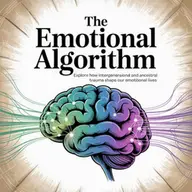
The Emotional Algorithm
Explore how intergenerational and ancestral trauma shape our emotional lives. This blog blends psychology, neuroscience, and everyday experiences to help you identify and override inherited emotional patterns. Learn to break free from family and multigenerational trauma and create a healthier, freer legacy. Each post is a micro-update guiding you toward emotional evolution. Inspired by the book, "The Generational Algorithm: Rewriting the Emotional Code Passed Down Through Generations" by Francisco Castillo.
Pick up right where you left off
- Resume on any device
- Progress saved on every episode
- Plus every other Pro feature
From €2.49/month
Episodes
Showing the latest 100 episodes of this show.
Complex Trauma
Nov 3, 2026 · 3m
Resume with ProWhen people hear “trauma,” they may picture one frightening event. But complex trauma often grows through repeated experiences of fear, neglect, instability, or harm, especially when they happen in relationships where we depend on other people. It can shape how safe we feel, how we respond to conflict, and what we expect from ourselves and others. Today, we’ll explore how those patterns can echo...
Emotional Neglect
Nov 2, 2026 · 3m
Resume with ProEmotional neglect can be difficult to recognize because it is often defined by what was missing rather than what happened. A child may have food, shelter, and a family that cares about them, yet still feel alone with their fear, sadness, or need for comfort. In this episode, we explore how that absence can shape emotional life across generations—and how understanding the pattern can help us begin...
Ancestral Grief
Nov 1, 2026 · 3m
Resume with ProSome grief arrives before we have words for it. It may surface as a family’s silence around a migration, a loss no one discusses, or a feeling of responsibility that seems older than our own story. In this episode, we’re exploring ancestral grief: how painful experiences can echo across generations, what psychology and neuroscience can—and can’t—tell us about those echoes, and how we might begin...
Childhood Attachment Patterns
Oct 30, 2026 · 3m
When we talk about the past, we often picture memories we can name. But some of what shapes us may show up in quieter ways: how safe we feel getting close to someone, what we do when conflict begins, or whether we expect others to meet our needs. In this episode, we’re exploring childhood attachment patterns, the emotional experiences that help form them, and how family history can echo across...
Family Role Reversal
Oct 29, 2026 · 3m
Some children become experts at reading the room before they can name what they’re feeling. They notice a parent’s changing mood, calm a sibling, or keep their own needs quiet to prevent conflict. This kind of family role reversal happens when a child takes on emotional or practical responsibilities that belong to the adults. It can grow out of crisis, illness, addiction, loss, or patterns passed...
Inherited Coping Strategies
Oct 28, 2026 · 3m
Have you ever noticed yourself reacting strongly to something that seems small, then wondered where that response came from? Sometimes our habits around conflict, safety, closeness, or control were shaped long before we were born—not by a memory passed down intact, but by patterns learned in families and communities over time. Today, we’re exploring inherited coping strategies: how they can take...
Family Emotional Climate
Oct 27, 2026 · 3m
Welcome to Family Emotional Climate . When we talk about family history, we often picture stories, photographs, and traditions. But families also pass along ways of handling fear, anger, grief, and closeness. Today, we’re exploring how those emotional patterns can travel across generations—and how understanding them can help us make room for something new. First, think of a family’s emotional...
Parental Emotional Modeling
Oct 26, 2026 · 3m
When we talk about what children inherit, we often picture family stories, heirlooms, or familiar ways of speaking. But they may also learn how to handle fear, anger, sadness, and closeness simply by watching the adults around them. That’s parental emotional modeling: the everyday ways caregivers express feelings, respond to stress, and make room—or don’t—for emotion. It can pass along...
Biology of Emotions
Oct 25, 2026 · 3m
What if an emotion that feels deeply personal also carries a family history? In this episode of Biology of Emotions , we explore how the body, brain, and relationships shape the way we respond to the world—and how patterns can echo across generations. The goal isn’t to blame our ancestors or explain every feeling through biology. It’s to understand what we’ve inherited, what we’ve learned, and...
Epigenetic Stress Effects
Oct 24, 2026 · 3m
When we talk about trauma passing from one generation to the next, it can sound as if painful memories are somehow written directly into our genes. The reality is more complex—and, importantly, less deterministic. Epigenetic stress effects are one area researchers are exploring to understand how experiences may influence the way genes are regulated, while family relationships, culture, and living...
Neuroscience of Feelings
Oct 23, 2026 · 3m
When a feeling arrives before you can explain it, it may seem to come from nowhere. A tight chest, a sudden urge to withdraw, or an outsized alarm in an ordinary disagreement can feel mysterious. The neuroscience of feelings offers a useful starting point: emotions are not simply thoughts, and they are not fixed instructions. They emerge from the brain and body working together, shaped by...
Parental Trauma Effects
Oct 22, 2026 · 3m
When we talk about parental trauma effects, we’re not saying that a painful past automatically determines a child’s future. We’re looking at the ways unresolved stress can shape family relationships, emotional habits, and a child’s sense of safety—and how those patterns can change. Understanding the pathways is not about blaming parents. It’s about making room for compassion, clarity, and...
Family Communication Styles
Oct 21, 2026 · 3m
Welcome to the episode, “Family Communication Styles.” Today, we’re looking at how the ways we speak, listen, argue, and go quiet can travel through families across generations. Family communication styles aren’t just habits picked up in childhood; they can also be shaped by what earlier generations learned they needed to do to feel safe, belong, or get through difficult times. Understanding...
Healing Family Relationships
Oct 20, 2026 · 3m
Welcome to this episode on healing family relationships. When conflict, silence, anxiety, or emotional distance seem to echo across generations, it’s natural to wonder whether we’re carrying more than our own experiences. Today, we’ll explore intergenerational trauma, what neuroscience can tell us about emotions, and how healing family relationships can begin without blaming the people who came...
Childhood Emotional Neglect
Oct 19, 2026 · 3m
In this episode, we’re exploring childhood emotional neglect: the experience of growing up without enough emotional attention, understanding, or support. It doesn’t always leave a visible mark. A child may have food, shelter, and caregivers who love them, yet still learn that their feelings are inconvenient, confusing, or best kept private. We’ll look at how those lessons can shape us—and how...
Learned Family Behaviors
Oct 18, 2026 · 3m
Some of the rules we follow at home were never spoken aloud. Maybe anger meant silence, asking for help felt unsafe, or love was shown through sacrifice rather than affection. These learned family behaviors can shape how we handle emotions and relationships long after we leave the households where they began. Understanding them isn’t about blaming our families. It’s about noticing what we...
Family of Origin
Oct 17, 2026 · 3m
When we talk about healing, we often begin with the person we are today. But our emotional lives have roots: in the homes where we grew up, the stories our families told, and the feelings that were welcomed—or left unspoken. Exploring our family of origin isn’t about assigning blame. It’s about understanding what we learned about safety, connection, and being ourselves, so we can decide what we...
Trauma Informed Parenting
Oct 16, 2026 · 3m
Welcome to this episode on trauma informed parenting, and the ways our family histories can shape how we respond to our children. Many of us carry patterns we didn’t choose: shutting down during conflict, reacting intensely to a child’s distress, or believing that obedience matters more than connection. Noticing these patterns isn’t about blaming our parents—or ourselves. It’s a chance to...
Family Estrangement
Oct 15, 2026 · 3m
Family estrangement can feel like a door closing on a whole history. When contact with a parent, sibling, or child becomes painful or unsafe, choosing distance may be an act of protection. It can also bring grief, guilt, relief, and longing—all at once. Today, we’re exploring how family estrangement can connect with inherited patterns, emotional memory, and the possibility of healing, whether or...
Parental Modeling
Oct 14, 2026 · 3m
What did you learn about emotions before you had words for them? Maybe you watched a parent go quiet when they were hurt, explode when they felt powerless, or hide every sign of fear. Those moments can become lessons—not because children consciously choose to copy them, but because caregivers help shape what feels normal, safe, and possible. Today, we’re exploring parental modeling: how emotional...
Stress Adaptation
Oct 13, 2026 · 3m
What if the ways we react to stress began before we were old enough to understand what stress was? In this episode, we explore how family history, early experiences, and the body’s own survival responses can shape the patterns we carry. Understanding stress adaptation isn’t about blaming our ancestors—or assuming we’re destined to repeat their struggles. It’s about noticing how a once-useful...
Trauma Reenactment
Oct 12, 2026 · 3m
Have you ever found yourself repeating a relationship pattern you promised yourself you would never repeat? Maybe conflict feels strangely familiar, or you keep choosing people who leave you feeling unseen. These moments can be confusing, but they are not proof that you are broken or destined to repeat the past. Today, we’re exploring trauma reenactment: how painful experiences can shape the...
Emotional Conditioning
Oct 11, 2026 · 3m
Why can a reaction feel bigger than the moment in front of us? A sharp tone, a missed call, or a small mistake may stir fear or shame that seems to come from nowhere. In this episode, “Emotional Conditioning,” we explore how emotional patterns can travel through families—not as an unchangeable inheritance, but through the ways people learn to feel safe, connect, and cope. First, emotional...
Emotional Contagion
Oct 10, 2026 · 3m
Have you ever walked into a room and felt your mood change before anyone said a word? That shift may be emotional contagion: the way feelings can pass between people through facial expressions, tone of voice, posture, and attention. In this episode, we’re exploring how that everyday process can connect with family history, intergenerational trauma, and the patterns we may carry forward—often...
Emotional Awareness
Oct 9, 2026 · 3m
What if a reaction that feels entirely yours also has a longer family story behind it? A slammed door, a difficult conversation, or even a moment of closeness can stir feelings we don’t fully understand. Today, we’re exploring emotional awareness: how noticing what we feel can help us understand inherited patterns without assuming our past—or our family’s past—has to define our future. First...